
Every year on July 7th, chocolate lovers around the globe celebrate World Chocolate Day. This is also being celebrated in India. India tasted chocolates during the British rule and later popularised by Cadbury brand of Milk Chocolates which we grew up to indulge in our childhood. Although Chocolate was considered a tonic — prescribed for fatigue, digestion, and even melancholy. Apothecaries sold it as a health drink rich in energy and nutrients, so when and why did chocolates were started be negatively associated with diabetics and negative health benefits. But beyond indulgence, what does science actually say about chocolate’s impact on our health?
 Unwrapping Myths, Science, and the Sweet Paradox
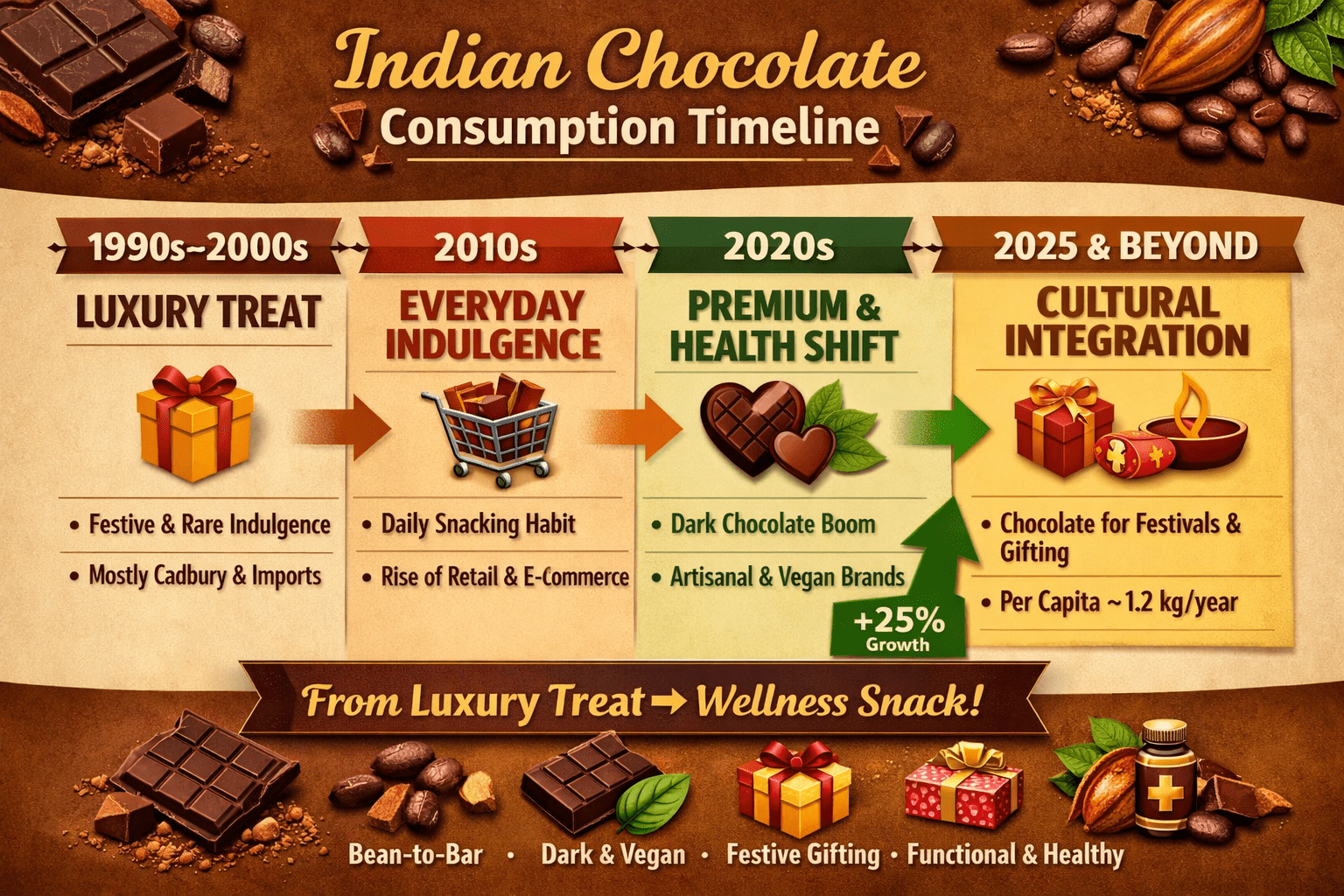
India stands at a curious crossroads — crowned as the World’s Diabetic Capital, yet witnessing an unprecedented surge in chocolate consumption. From luxury indulgence to wellness snack, chocolate has evolved into a cultural phenomenon. But how does this sweet obsession coexist with rising metabolic disorders? The answer lies in separating myth from science.
🩺 The Paradox of Sweetness
India’s diabetic population crossed 100 million in 2025, according to national health estimates. Yet, chocolate sales grew by 10–12% annually, with Per capita consumption: ~1.2 kg/year (tripled since 2010), driven by urbanization, gifting culture, and the rise of premium dark chocolate. This paradox isn’t just about taste — it’s about perception. Chocolate is no longer seen as a guilty pleasure; it’s being rebranded as a functional food rich in antioxidants and mood‑enhancing compounds.
 🍬 Myths vs. Reality
| Myth | Reality |
| Chocolate spikes blood sugar dangerously | Dark chocolate (≥70% cocoa) has a lower glycemic index and may improve insulin sensitivity when consumed moderately.
Controlled portions of dark chocolate may improve insulin sensitivity. However, diabetics should avoid sweetened varieties and monitor total carbohydrate intake. |
| Chocolate causes obesity | Excess calories cause obesity, not cocoa itself. Controlled portions of dark chocolate can support metabolism. Overeating any calorie-dense food can lead to weight gain, but moderate dark chocolate consumption (20–30g/day) doesn’t inherently cause obesity. In fact, cocoa flavanols may help regulate metabolism. |
| Chocolate is off‑limits for diabetics | Clinical studies show flavanols in cocoa may aid vascular health and reduce oxidative stress — beneficial for diabetics when sugar content is minimal. |
| Chocolate equals junk food | High‑quality cocoa is nutrient‑dense, containing magnesium, iron, and polyphenols. The problem lies in added sugar and fat, not cocoa. |
| Chocolate causes acne | Multiple dermatological studies show no direct link between chocolate and acne. Skin breakouts are more influenced by hormones, stress, and overall diet than by cocoa itself. |
| Chocolate is addictive like drugs | While chocolate triggers dopamine release (the “feel-good” hormone), it’s not chemically addictive. The craving is more psychological and sensory than pharmacological. |
| Chocolate is bad for your heart | High-sugar milk chocolates can raise cholesterol, but dark chocolate rich in flavanols may improve vascular function and reduce cardiovascular risk. |
| Chocolate causes cavities | Pure cocoa doesn’t cause tooth decay; added sugars do. Some compounds in cocoa even have antibacterial effects against oral bacteria. |
| Chocolate increases cholesterol | Cocoa butter contains stearic acid, which is neutral on blood cholesterol. The problem lies in added fats and sugars in processed chocolates. |
🧠 What Clinical Research Reveals
- Cardiovascular Health
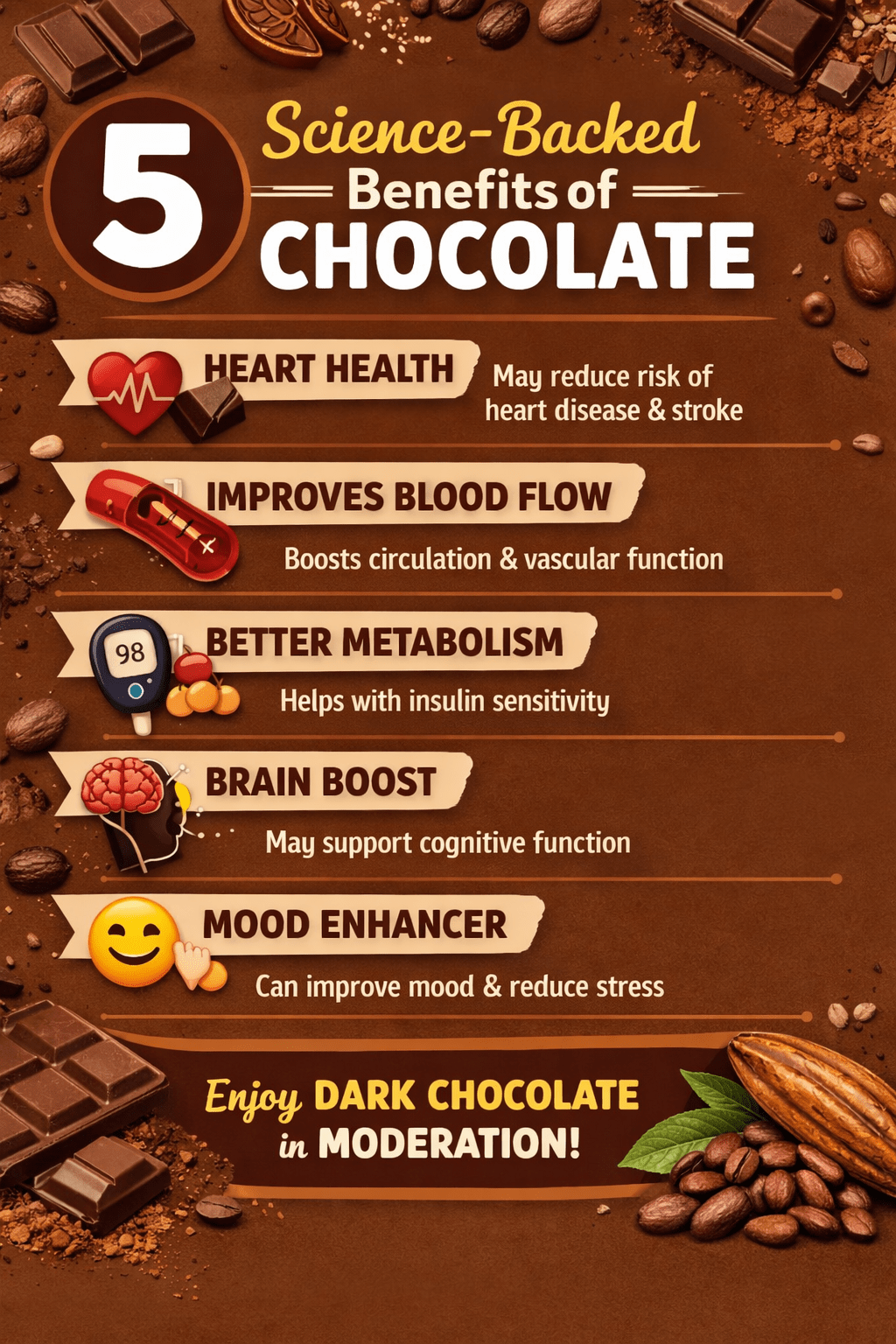
Systematic reviews show that cocoa flavanols can improve vascular function, measured by flow-mediated dilation (a marker of blood vessel health). Observational studies suggest that moderate chocolate consumption may reduce the risk of heart disease, stroke, and cardiovascular mortality. However, most trials are short-term (4–6 weeks) and rated low in evidence quality.
- Metabolic Outcomes
Some randomized controlled trials (RCTs) report improvements in insulin sensitivity and lipid profiles (particularly triglycerides). Yet, results are inconsistent, and benefits often depend on consuming high-flavanol cocoa extracts rather than sugar-rich confectionery chocolate.
- Cognition & Mood
Research into chocolate’s effects on cognitive performance and depressive symptoms is inconclusive. While cocoa’s antioxidants may support brain health, clinical trials have not shown strong or lasting effects.
- Other Health Areas
Studies on skin health, anthropometry (body measurements), and quality of life show little to no significant impact. Some participants even reported gastrointestinal discomfort or found high-flavanol cocoa unpalatable.
| Study Type | Outcomes Studied | Findings | Evidence Strength |
| Umbrella Review (Clinical Nutrition, 2019) | Cardiovascular disease, stroke, diabetes, mood, cognition | Reduced risk of CVD death, myocardial infarction, stroke, diabetes (observational); improved vascular function in RCTs | Weak credibility; GRADE rated low/very low |
| Systematic Review (MDPI, 2021) | Skin, cardiovascular, lipid profile, cognition, anthropometry, glucose, QoL | Improved triglyceride levels; no significant differences in other outcomes | Low-to-moderate quality, short duration (4–6 weeks) |
| Meta-analyses (RCTs) | Flow-mediated dilation, insulin resistance | Positive association with vascular function and insulin sensitivity | Low-quality evidence |
| Observational Cohorts | Long-term health outcomes | Suggest protective effects against CVD and diabetes | Weak evidence, possible bias |
In summary, clinical trials and meta-analyses confirm:
- Cocoa flavanols improve blood flow and endothelial function.
- Moderate consumption may reduce risk of heart disease and stroke.
- Antioxidants in cocoa combat oxidative stress.
- Excessive intake of sugary chocolate negates these benefits.
⚠️ Negative Propaganda & Misconceptions
- “Chocolate is junk food.” While commercial chocolates can be high in sugar, cocoa itself is nutrient-rich and contains antioxidants, magnesium, and iron.
- “Chocolate leads to depression.” Some studies show chocolate may improve mood temporarily due to serotonin and endorphin release.
- “Chocolate is only for indulgence.” Modern research recognizes chocolate’s functional food potential, especially in cardiovascular and cognitive health.
 ⚖️ The Sweet Balance
So why is this Paradox? How do we balance this?
Chocolate isn’t the enemy — excess and misinformation are. For diabetics and health‑conscious consumers:
- Choose dark chocolate (≥70% cocoa).
- Limit intake to 20–30 g/day.
- Avoid sugar‑loaded commercial variants.
- Pair with balanced diet and physical activity.
Final Thought
India’s story of diabetes and chocolate isn’t contradiction — it’s transformation. As science reframes cocoa from indulgence to potential ally, the challenge lies in education and moderation. On this World Chocolate Day, let’s celebrate responsibly — savouring the flavour, respecting the science, and redefining sweetness for a healthier future.
Have a Healthy Chocolate Day!
Disclaimer: I do not own a Chocolate Factory nor hold any positions or equities in any Chocolate Companies!