
India: Diabetic Capital meets Chocolate Boom – A Paradox of Health and Indulgence

India: Diabetic Capital meets Chocolate Boom - A Paradox of Health and Indulgence

Every year on July 7th, chocolate lovers around the globe celebrate World Chocolate Day. This is also being celebrated in India. India tasted chocolates during the British rule and later popularised by Cadbury brand of Milk Chocolates which we grew up to indulge in our childhood. Although Chocolate was considered a tonic — prescribed for fatigue, digestion, and even melancholy. Apothecaries sold it as a health drink rich in energy and nutrients, so when and why did chocolates were started be negatively associated with diabetics and negative health benefits. But beyond indulgence, what does science actually say about chocolate’s impact on our health?
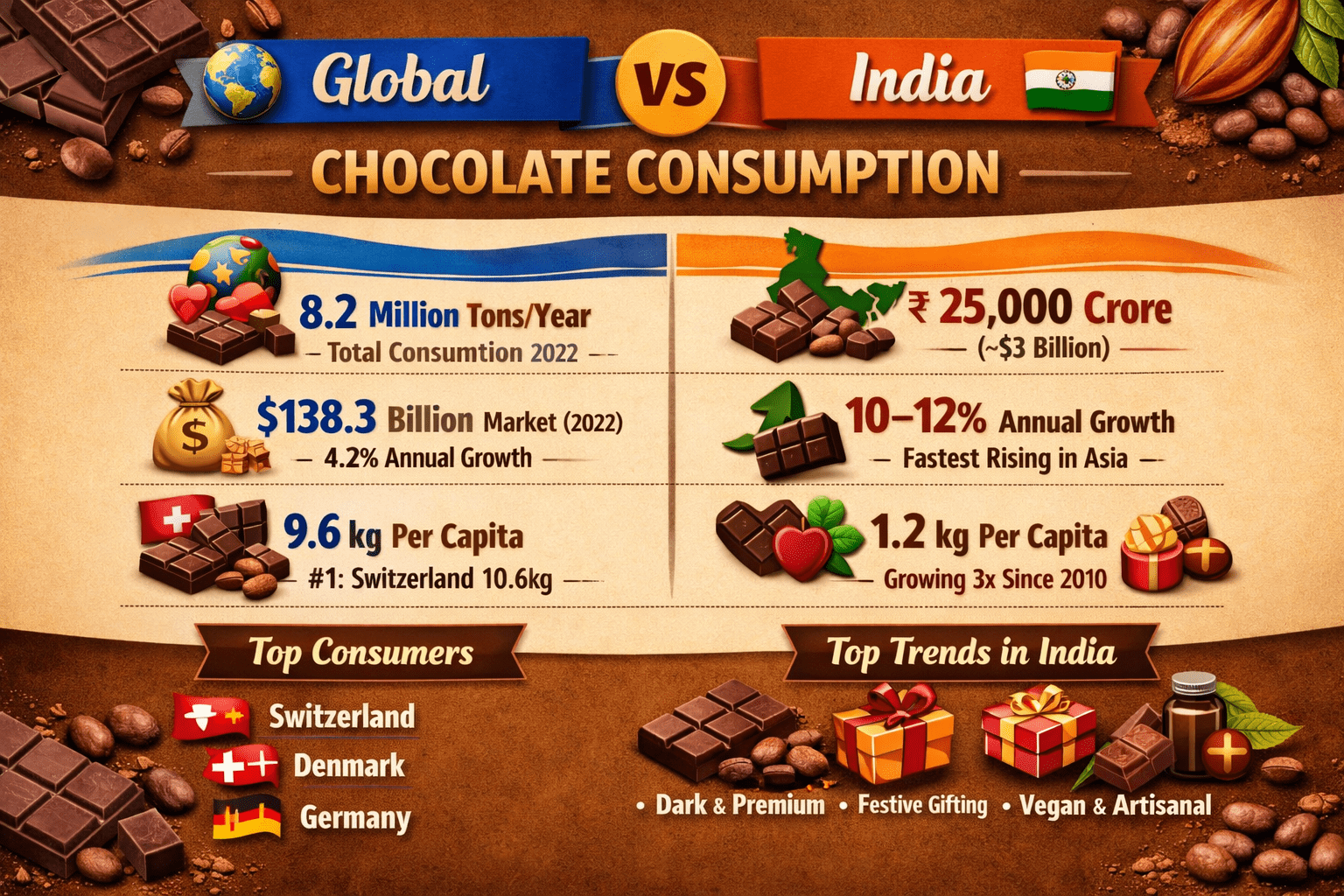
Choco StatsUnwrapping Myths, Science, and the Sweet Paradox

India stands at a curious crossroads — crowned as the World’s Diabetic Capital, yet witnessing an unprecedented surge in chocolate consumption. From luxury indulgence to wellness snack, chocolate has evolved into a cultural phenomenon. But how does this sweet obsession coexist with rising metabolic disorders? The answer lies in separating myth from science.

🩺 The Paradox of Sweetness

India’s diabetic population crossed 100 million in 2025, according to national health estimates. Yet, chocolate sales grew by 10–12% annually, with Per capita consumption: ~1.2 kg/year (tripled since 2010), driven by urbanization, gifting culture, and the rise of premium dark chocolate. This paradox isn’t just about taste — it’s about perception. Chocolate is no longer seen as a guilty pleasure; it’s being rebranded as a functional food rich in antioxidants and mood‑enhancing compounds.
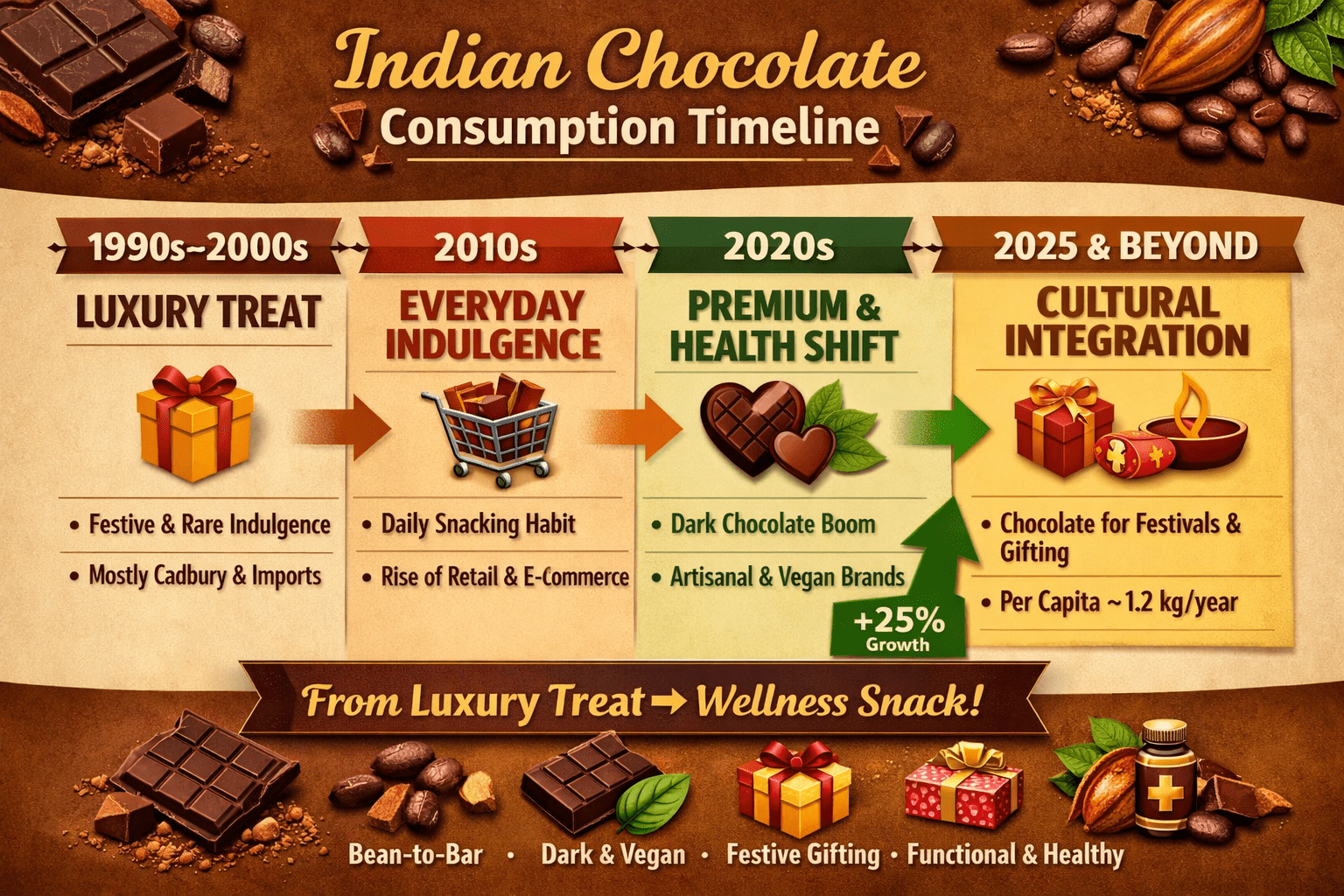
India Chocolate Journey🍬 Myths vs. Reality

MythReality
Chocolate spikes blood sugar dangerouslyDark chocolate (≥70% cocoa) has a lower glycemic index and may improve insulin sensitivity when consumed moderately.

Controlled portions of dark chocolate may improve insulin sensitivity. However, diabetics should avoid sweetened varieties and monitor total carbohydrate intake.

Chocolate causes obesityExcess calories cause obesity, not cocoa itself. Controlled portions of dark chocolate can support metabolism. Overeating any calorie-dense food can lead to weight gain, but moderate dark chocolate consumption (20–30g/day) doesn’t inherently cause obesity. In fact, cocoa flavanols may help regulate metabolism.
Chocolate is off‑limits for diabeticsClinical studies show flavanols in cocoa may aid vascular health and reduce oxidative stress — beneficial for diabetics when sugar content is minimal.
Chocolate equals junk foodHigh‑quality cocoa is nutrient‑dense, containing magnesium, iron, and polyphenols. The problem lies in added sugar and fat, not cocoa.
Chocolate causes acneMultiple dermatological studies show no direct link between chocolate and acne. Skin breakouts are more influenced by hormones, stress, and overall diet than by cocoa itself.
Chocolate is addictive like drugsWhile chocolate triggers dopamine release (the “feel-good” hormone), it’s not chemically addictive. The craving is more psychological and sensory than pharmacological.
Chocolate is bad for your heartHigh-sugar milk chocolates can raise cholesterol, but dark chocolate rich in flavanols may improve vascular function and reduce cardiovascular risk.
Chocolate causes cavitiesPure cocoa doesn’t cause tooth decay; added sugars do. Some compounds in cocoa even have antibacterial effects against oral bacteria.
Chocolate increases cholesterolCocoa butter contains stearic acid, which is neutral on blood cholesterol. The problem lies in added fats and sugars in processed chocolates.

🧠 What Clinical Research Reveals

  1. Cardiovascular Health

Systematic reviews show that cocoa flavanols can improve vascular function, measured by flow-mediated dilation (a marker of blood vessel health). Observational studies suggest that moderate chocolate consumption may reduce the risk of heart disease, stroke, and cardiovascular mortality. However, most trials are short-term (4–6 weeks) and rated low in evidence quality.

  1. Metabolic Outcomes

Some randomized controlled trials (RCTs) report improvements in insulin sensitivity and lipid profiles (particularly triglycerides). Yet, results are inconsistent, and benefits often depend on consuming high-flavanol cocoa extracts rather than sugar-rich confectionery chocolate.

  1. Cognition & Mood

Research into chocolate’s effects on cognitive performance and depressive symptoms is inconclusive. While cocoa’s antioxidants may support brain health, clinical trials have not shown strong or lasting effects.

  1. Other Health Areas

Studies on skin health, anthropometry (body measurements), and quality of life show little to no significant impact. Some participants even reported gastrointestinal discomfort or found high-flavanol cocoa unpalatable.

Study TypeOutcomes StudiedFindingsEvidence Strength
Umbrella Review (Clinical Nutrition, 2019)Cardiovascular disease, stroke, diabetes, mood, cognitionReduced risk of CVD death, myocardial infarction, stroke, diabetes (observational); improved vascular function in RCTsWeak credibility; GRADE rated low/very low
Systematic Review (MDPI, 2021)Skin, cardiovascular, lipid profile, cognition, anthropometry, glucose, QoLImproved triglyceride levels; no significant differences in other outcomesLow-to-moderate quality, short duration (4–6 weeks)
Meta-analyses (RCTs)Flow-mediated dilation, insulin resistancePositive association with vascular function and insulin sensitivityLow-quality evidence
Observational CohortsLong-term health outcomesSuggest protective effects against CVD and diabetesWeak evidence, possible bias

In summary, clinical trials and meta-analyses confirm:

  • Cocoa flavanols improve blood flow and endothelial function.
  • Moderate consumption may reduce risk of heart disease and stroke.
  • Antioxidants in cocoa combat oxidative stress.
  • Excessive intake of sugary chocolate negates these benefits.

⚠️ Negative Propaganda & Misconceptions

  • “Chocolate is junk food.” While commercial chocolates can be high in sugar, cocoa itself is nutrient-rich and contains antioxidants, magnesium, and iron.
  • “Chocolate leads to depression.” Some studies show chocolate may improve mood temporarily due to serotonin and endorphin release.
  • “Chocolate is only for indulgence.” Modern research recognizes chocolate’s functional food potential, especially in cardiovascular and cognitive health.
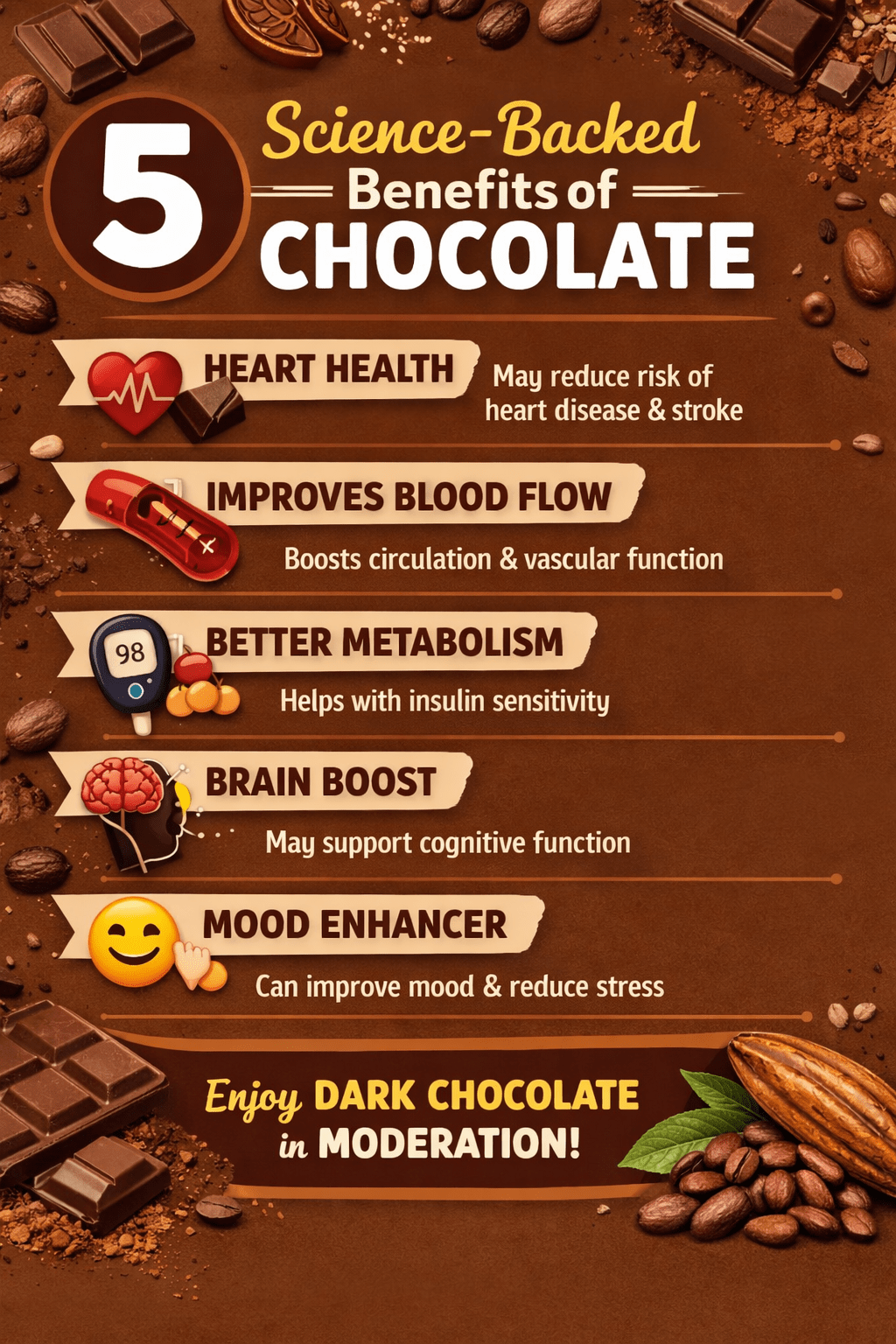
The Choco Balance⚖️ The Sweet Balance

So why is this Paradox? How do we balance this?

Chocolate isn’t the enemy — excess and misinformation are. For diabetics and health‑conscious consumers:

  • Choose dark chocolate (≥70% cocoa).
  • Limit intake to 20–30 g/day.
  • Avoid sugar‑loaded commercial variants.
  • Pair with balanced diet and physical activity.

Final Thought

India’s story of diabetes and chocolate isn’t contradiction — it’s transformation. As science reframes cocoa from indulgence to potential ally, the challenge lies in education and moderation. On this World Chocolate Day, let’s celebrate responsibly — savouring the flavour, respecting the science, and redefining sweetness for a healthier future.

Have a Healthy Chocolate Day!

Disclaimer: I do not own a Chocolate Factory nor hold any positions or equities in any Chocolate Companies! 

 

A Very Heavy and Weighty 2025 New Year Resolution!

A Very Heavy and Weighty 2025 New Year Resolution!

2025 New Year Resolutions

It’s that time of the year when we make New Year’s Resolutions. This year’s number one resolution that tops the chart is healthy diet and weight loss which is being wished by 51% of the people. Next is wishing for wealth which is wished by 21%. Finally comes spending quality time with friends and family which is wished by 14%. This is much lower this year post covid lockdown. Is there any correlation to the obesity trends in India with the New Year’s Resolutions for 2025?

Obesity Trends in India

Body Mass Index (BMI) scale is used to indicate if one is obese or not. The different classifications are as unde for India. Please note that this is not the same for other countries which may vary or are higher:

  • Normal BMI: 18.0-22.9 kg/m²
  • Overweight: 23.0-24.9 kg/m²
  • Obesity: ≥25 kg/m²

The prevalence of obesity has been increasing, with nearly one in four Indians now considered overweight. Approximately 24% of women and 23% of men aged 15-49 are classified as overweight or obese in India. Obesity rates are higher in urban areas (30% of men and 33% of women) compared to rural areas (19% of men and 25% of women).

Dietary Trends in India

The Economic Survey 2023-24 noted unhealthy diets and rising rates of obesity need to be tackled urgently to improve health parameters, in order to reap the gains of the country’s demographic dividend. Citing the Indian Council of Medical Research’s (ICMR) latest dietary guidelines, published in April this year, it notes the fact that 56.4% of the total disease burden in India is due to unhealthy diets. The ICMR report observes that the upsurge in the consumption of highly processed foods, laden with sugars and fat, coupled with reduced physical activity and limited access to diverse foods, exacerbate micronutrient deficiencies and overweight/obesity problems.

Correlating Obesity, Diet and 2025 New Year’s Resolutions

There seems to be a positive correlation between the weight loss and what people wishing to achieve in 2025 with respect to their diet and weight. These are many reasons for this correlation. These could be:

  • Calling for ill-Health: Obesity leads to chronic inflammation and impact longevity (listen to podcast on longevity https://open.spotify.com/episode/19pvPEE7f5UGgzJyXSlLsS?si=5f06687dfcf64232). Over the years, the body’s organs don’t function as effectively as they should. Damage to the pancreas, for example, leads to diabetes; damage to the heart leads to cardiovascular disease; and damage to the brain leads to dementia. And even if someone loses weight, the damage is not irreversible. (The liver is the only organ that can regenerate itself.) Obesity is also linked to many cancers, musculoskeletal problems, depression and obstructive sleep apnea. Some of the co-morbidities with obesity and overweight people include:
    • Chronic Kidney Disease
    • Type 2 Diabetes         
    • Cardiovascular Disease
    • PAD (Peripheral Arterial Disease)
    • Alzheimer’s  
    • Heart Failure
    • MASH (Fatty Liver Disease)

Sounds very alarming for increasing healthcare costs!

  • Better Employability: As per the National Health and Family Surveys, obese and over weight people have issues with their employability and their ability to work. This is tied to their overall health and their physical abilities. Hence being fit and normal BMI works in their favour.
  • Lifestyle, Fashion and Aesthetics: One of the most fundamental drivers of behavior is the desire to look attractive. Sales for personal care and beauty products easily exceed USD 25 billion by 2029, and sales for apparel reach USD 550 billion by 2029. This is a very aspiration segment. (listen to podcast: https://open.spotify.com/episode/36TCAlD1gglGXoWJtDa27o?si=09dd617d77434985). A significant number of Indians are unhappy with their weight and body image. A study involving participants from 65 countries found that Indians have lower body image satisfaction compared to many other nations.

Meeting and Beating the 2025 New Year Resolutions

Like any resolution, the compliance to any New Year Resolution is very low. Coming to managing ones weight reduction, the compliance is even lower. The level of compliance with weight loss programs among Indians varies widely. Several factors influence this, including cultural attitudes towards weight, accessibility to resources, and individual motivation.

  • Cultural Attitudes: In many parts of India, there is a cultural acceptance of larger body sizes, which can affect motivation to lose weight.
  • Accessibility to Resources: Access to weight loss programs, gyms, and healthy food options can be limited, especially in rural areas.
  • Individual Motivation: Personal commitment and motivation play a crucial role. Many individuals start weight loss programs but struggle to maintain long-term adherence due to lifestyle challenges and lack of support.

With such low levels of compliance and issues surrounding it, what has the healthcare industry done to find solutions to the weighty problems?

Healthcare Industry’s Invasive and Non Invasive Solutions to Obesity

There are several invasive and non-invasive solutions to obesity reduction. Here’s a brief overview of both:

Invasive Solutions

  • Gastric Bypass Surgery: This procedure involves creating a small pouch from the stomach and connecting it directly to the small intestine. This bypasses a large part of the stomach and some of the small intestine, reducing the amount of food you can eat and absorb.
  • Gastric Sleeve Surgery: Also known as sleeve gastrectomy, this surgery removes a large portion of the stomach, leaving a tube-like structure. This limits the amount of food you can consume.
  • Adjustable Gastric Banding: A band is placed around the upper part of the stomach to create a small pouch that holds food. The band can be adjusted to control the amount of food intake.
  • Biliopancreatic Diversion with Duodenal Switch (BPD/DS): This complex surgery involves removing a portion of the stomach and bypassing a significant part of the small intestine. It reduces the amount of food intake and nutrient absorption

Invasive surgery is expensive and not affordable by many. Also, this has to be followed up with non-invasive and other cosmetic surgery later on.

Non-Invasive Solutions

  • CoolSculpting: This technique uses controlled cooling to freeze and destroy fat cells. The body then naturally eliminates these dead cells over time.
  • SculpSure: A laser-based treatment that targets and heats fat cells, causing them to break down and be absorbed by the body.
  • Kybella: An injectable treatment that destroys fat cells under the chin, improving the appearance of a double chin
  • Emsculpt: This procedure uses high-intensity focused electromagnetic energy to induce muscle contractions, which can help reduce fat and build muscle.
  • Lifestyle Modifications: Diet and exercise remain fundamental. Behavioral therapy and support groups can also be effective in managing obesity

Each method has its own benefits and risks, and the best choice depends on individual health conditions, preferences, and goals.

GLP-1 The Magic Pill for Obesity

During 2024, a hype has been created over social media, celebrities both in Bollywood and Hollywood about GLP-1 (glucagon-like peptide-1), the wonder drug and magic pill for weight reduction. For the scientifically advanced beings, brief overview of the mechanism of action of GLP-1 (Glucagon-Like Peptide-1):

  • Secretion: GLP-1 is secreted by the intestinal L-cells in response to food intake.
  • Receptor Binding: GLP-1 binds to its receptors located in various organs, including the pancreas, brain, stomach, and heart.
  • Insulin Secretion: In the pancreas, GLP-1 enhances glucose-dependent insulin secretion.
  • Glucagon Suppression: It suppresses glucagon release, which helps lower blood glucose levels.
  • Gastric Emptying: GLP-1 slows gastric emptying, promoting satiety and reducing food intake.
  • Neuroprotection: It has neuroprotective effects and may improve cognitive function.

For the least scientifically advanced beings, GLP-1 works in reducing the food appetite and the weight of a person by 15-20%. In addition, GLP-1 also works on other co-morbidies such as

  • Diabetes Management: GLP-1 agonists are medications that help lower blood sugar levels by increasing insulin secretion and decreasing glucagon release. They also slow down gastric emptying, which helps control blood sugar spikes after meals.
  • Weight Loss: These medications are also effective for weight loss. They work by reducing appetite and increasing feelings of fullness, which can lead to reduced calorie intake and weight loss.
  • Cardiovascular Benefits: Some GLP-1 agonists have been shown to provide cardiovascular benefits, such as reducing the risk of heart attack and stroke in people with type 2 diabetes.
  • Potential Kidney Benefits: Emerging research suggests that GLP-1 agonists may also have protective effects on kidney function.
  • Parkinson, Alzheimer’s and Dementia: Early clinical research is showing effective results in patients with neuro issues with a lower risk of the cognitive issues (such as memory loss) that are often an early sign of dementia.
  • Addiction Management: This is still very early and GLP-1 is being tested on animals and showing positive results on addiction to alcohol and nicotine.

Statutory Warning:

All drugs have side effects, and the GLP-1s are no exception. The most common ones are gastro-intestinal problems, for example diarrhea. In addition, the drugs cause the loss of lean muscle mass, which is particularly concerning for the elderly. Moreover, newer formulations or the next generation of GLP-1 are also being researched and will circumvent the side effects.

GLP-1 in India

In India, several GLP-1 (glucagon-like peptide-1) receptor agonists are available for the management of diabetes and obesity. Here are some of the notable ones:

  • Liraglutide: Marketed under the brand name Lirafit™ by Glenmark Pharmaceuticals, this drug is used to improve glycemic control in adults with type 2 diabetes.
  • Semaglutide: Available as an oral formulation, this drug is marketed by Novo Nordisk India and is used for diabetes management.
  • Exenatide: Another GLP-1 agonist used for diabetes treatment, though specific brand names in India may vary.

I am also informed that there is a venture working on GLP-1 extracted from plants peptides under development.

As for me, I am wishing that 2025 will bring in more innovation in GLP-1 solutions which are more effective!

Happy New Year 2025!