
After, ChatGPT has taken the world by storm after it was launched on 30 November last year. Sam Altman the founder of OpenAi who was the developer himself warned to the US Senate Committee that if gone unregulated how it would fall in wrong hands and create havoc for the world and that all the countries of the world should regulate AI for its development and use. In June when he visited India, at an event in Delhi, Sam Altman was asked whether three Indian engineers with $10 million could build something similar to OpenAI. In response, Altman said it was “hopeless” for a young team from India with limited resources to build a foundational artificial intelligence model similar to OpenAI.
QuoteUnquote with KK and Authors of AI Rising – India’s Artificial Intelligence Growth Story : Leslie D’Monte and Jayanth N Kolla Leslie debunk this and discuss how India can move forward from mobile first to AI first nation.
Also Read
AI Rising : India’s Artificial Intelligence Growth Story
Mckinsey Report: The Economic Potential of Generative AI
Stanford AI Report 2023
Governing AI : A Blueprint for India
Also Listen
Governing AI – India’s Opportunity to Lead by Brad Smith Co-chair, Task Force on Tech, Innovation and R&D; Vice Chair and President, Microsoft Corp, USA
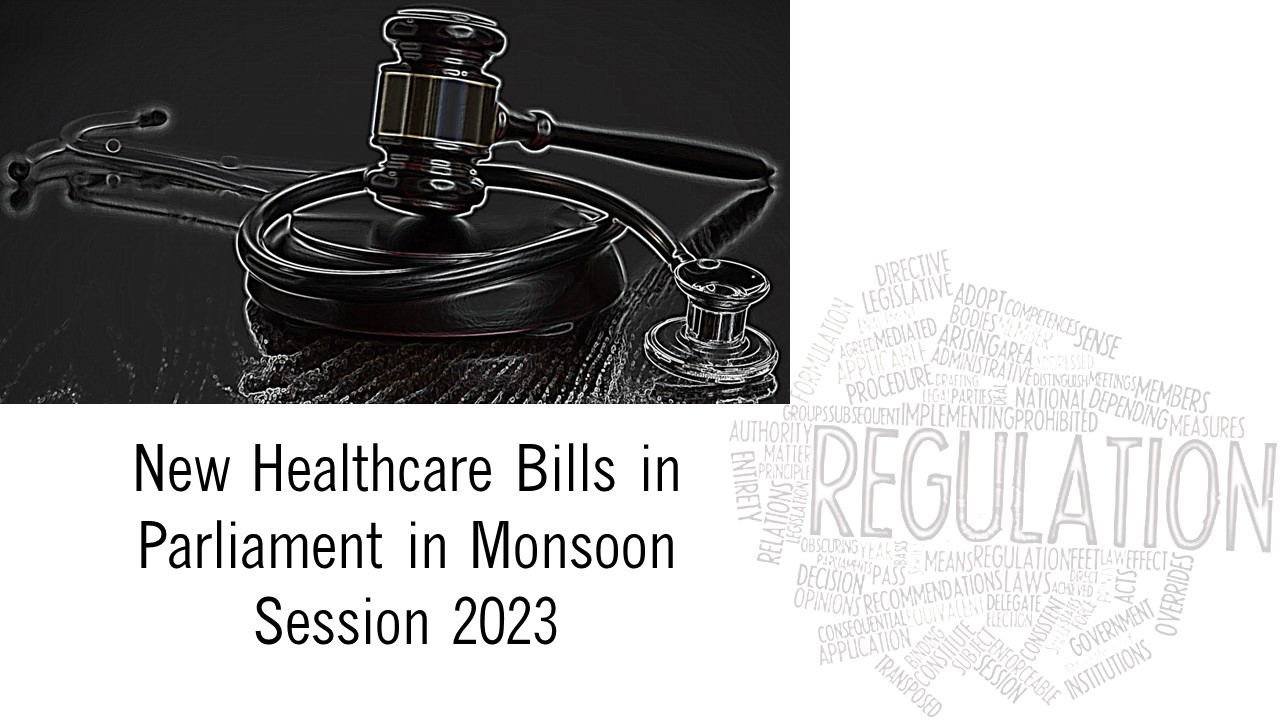
New Healthcare Bills in Parliament in Monsoon Session 2023
Background
The Covid Pandemic exposed some of the short comings and lacunae some of the Acts and Bills that have been enacted in India to regulate the healthcare and lifesciences industry. You may be surprised that some of these regulations pre-date the pre-independence British Era Regulations in this country. While healthcare and lifesciences products, services and professionals have progressed significantly over the last 75 years since Independence their regulations from the British Era hampered the progress. Six bills are being introduced are expected to be passed in this ongoing session of Parliament which commenced on July 20, 2023 and will be in session till August 11, 2023. These include:
Drugs, Medical Devices and Cosmetics Bill, 2023;
National Dental Commission Bill, 2023;
National Nursing and Midwifery Commission Bill, 2023;
Biological Diversity (Amendment) Bill, 2022;
Forest (Conservation) Amendment Bill, 2023; and
DNA Technology Bill (Use and Application) Bill, 2023
Let’s understand some of the Bills are being introduced directly by the Ministry of Health and Family Welfare while others are being introduced by other Ministries but have an impact on healthcare and lifesciences industry indirectly. Let’s quickly understand what these Bills are going to be enacted for.
The Drugs, Medical Devices and Cosmetics Bill 2023
This Bill seeks to regulate the import, manufacture, distribution and sale of drugs, medical devices and cosmetics. The focus of this bill is to ensure the medicine and medical devices quality, safety, efficacy, performance and clinical trials of new drugs and medical device. Beside, the Bill seeks clinical performance evaluation of new in-vitro diagnostic medical devices including Ayush medicine, medical devices and cosmetics with the objective of the highest possible regulatory standards, ensure a transparent regulatory regime and to repeal the archaic Drugs and Cosmetics Act, 1940. We do remember what was going on during the pandemic to fast track the approval of Pfizer and other companies vaccines in India without any clinical trials and data on Indians. Hopefully, this Bill will plug some of those loopholes that were being exploited by some of the multinational pharma companies to push their products into India during the Covid pandemic.
The National Dental Bill 2023
This Bill repeals the Dentists Act 1948. The proposes to set up a National Dental Commission (NMC) to regulate dental education and the profession in the country. It also seeks to make dental education affordable and raise its standards, and make quality oral healthcare accessible.
The National Nursing and Midwifery Commission Bill 2023
This Bill seeks to set up a National Nursing and Midwifery Commission (NNMC) and to repeal the Indian Nursing Council Act 1947. The Indian Nursing Council Act, 1947 is an act of the Indian parliament that regulates the nursing profession in India and was introduced by the Ministry of Health and Family Welfare in India.
The Drugs, Medical Devices and Cosmetics Bill 2023, The National Nursing and Midwifery Commission Bill 2023 and The National Dental Bill 2023 was introduced by the current minister of Health and Family Welfare, Mansukh Mandaviya.
The National Research Foundation Bill 2023
This Bill seeks to establish a National Research Foundation and repeal the SERB which is the Science and Engineering Research Board Act, 2008. The Science and Engineering Research Board Act, 2008 is an act of the Indian parliament that provides for the constitution of a Science and Engineering Research Board to support basic research in science and engineering.
The Science and Engineering Research Board Act, 2008 falls under the Ministry of Science and Technology in India.
The Biological Diversity (Amendment) Bill 2022
This was reported by the Joint Committee was introduced on December 16, 2021. The amendment report of the joint committee was presented to both the houses of Parliament which has proposed for consideration and passing. This Bill proposes to protect some of the plant species that would enable protection and development for Ayurveda.
The Forest (Conservation) Amendment Bill 2023
The controversial bill amends the Biological Diversity Act, 2002 to simplify compliance requirements for domestic companies. It also removes research and bio-survey activities from the purview of benefit sharing requirements. The bill also decriminalises all offences under the Act. Among several criticisms of the Bill was that it promotes ‘ease of doing business’ and would exempt users of codified traditional knowledge and Ayurveda, Yoga and Naturopathy, Unani, Siddha, and Homoeopathy (AYUSH) practitioners from sharing benefits with local communities.
Environment Minister Bhupendra Yadav will be introducing the Bill.
The DNA Technology Bill (Use and Application) Regulation
In the case this Bill which was introduced in the Parliament on July 8, 2019 is seen to have an issue. This is despite the report of the standing committee on Science and Technology, Environment, Forests and Climate Change was laid on the table of Lok Sabha on February 2021 the motion proposed was for withdrawal.
The DNA Technology Bill (Use and Application) regulation is a bill that seeks to regulate the use and application of DNA technology for establishing the identity of missing persons, victims, offenders and unknown deceased persons.
The above three bills is being tabled in the Parliament by the current Minister of Science and Technology, Dr. Jitendra Singh
Agri Revolution 2.0: Debunking the Poor Farmer Politics and Growing High Nutritional Food
Podcast
QuoteUnquote with KK and Harish Damodaran, Agri Expert, Editor, Author
In this podcast we discuss the dire and immediate need for an Agri Revolution 2.0 in India. As our population is ageing and health acuity increasing towards food intolerance and diet restrictions, we now need to also start producing more nutritious and healthy food not just for the elite classes but the masses as India enters mid-income countries club and the food basket of the people of India improves towards better dietary habits and food consumption. This may mean we may have to start growing new varieties of foods.
Where Are We Going Wrong with Universal Health Initiative (UHI)?
Introduction
In 2020, I wrote a blog titled From Telegraph Road to US$50 Billion Digital Health Silk Road Digital Health Silk Road Archives | Kapil Khandelwal KK celebrating the announcement of the National Digital Health Mission (NDHM) under the National Health Authority (NHA). We had worked out the direct and indirect impaction to the Indian economy that such an initiative will result. Over the next few years, the turn of events have led the country to not move forward on such a huge initiative for the healthcare of people of India. Let’s look at the turn of events leading up to the recent development and the way forward from here.
Key Developments in the Journey of Developing our Universal Health Initiative (UHI)
‘National Health Stack – Strategy and Approach’
In 2018, NITI Aayog released a document setting out the building blocks of the National Health Stack as ‘common public goods’ which are essential for an implementation of digital health initiatives in India. The key components described in the National Health Stack were national health electronic registries, claims platform, federated personal health records framework, national health analytics platform, and other horizontal components.
National Digital Health Blueprint (NDHB).
In 2019, Ministry of Health and Family Welfare (MoHFW) released the National Digital Health Blueprint (NDHB). The need for creating a framework for the evolution of a ‘National Digital Health Ecosystem’ (NDHE) – an ecosystem and not a system, was recognized in the NDHB. The NDHB lists out principles, building blocks, applications and digital services, standards, institutional frameworks etc, to create such an ecosystem.
National Telemedicine Guidelines
During Covid, the Medical Council of India (MCI) quickly released the National Telemedicine Guildlines to enable tele consultations so that limited capacity of the physicians is utilised for remote consultations during the pandemic and lockdowns.
Consultation Paper on Unified Health Interface (UHI)
In March 2021, MoHFW released a consultation paper on Unified Health Interface (UHI) to replicate its digital-payment success in healthcare. Taking cues from the Unified Payments Interface (UPI), it set out to establish a similar system for healthcare inclusion and universal health for the people on a ‘Bharat Stack’ for Healthcare. I am sure many of the tech industry bodies such as Nasscom, iSpirit and CII and FICCI would also have been consulted in framing the Consultation Paper.
Current Status
iSpirit, Indian tech industry body was appointed by National Health Authority (NHA) to lead the development of UHI. There have been delays in operationalizing the UHI and recent media reports state that key disagreement between the NHA and iSpirt on the nature of the UHI network-and iSpirit walking away from the project.
Why Did UHI not take Off?
iSpirit and Media View Points
There is a long format article from Ken that has been doing rounds and my talks with some of the Healthtech and other VC investors interested in this initiative have been summarized here:
Limited use of iSpirit partners for building components
Rationale of iSpirit partners that were short-listed for pilot and those left out for the wider roll out in the next stage
Conflict of interest between the iSpirit partners shortlisted that would push their product/components into the UHI pilot making it not a fully open system
Lack of openness between the iSpirit and NHA on the development and roadmap for wider participation of healthcare industry players
Slippage of deadlines for the teleconsultation solution multiple times drawing the ire of NHA
Self-doubts within iSpirit on the future success of the pilot and the eventual scale of UHI
iSpirits experience with other non-healthcare solutions roll-outs on the way forward in the roll out of UHI to the nation which is not true for healthcare as compared to fintech, social commerce and other digital solutions
My Views on Current UHI’s State
Let me tackle the lack of understanding of the reality of the Indian healthcare system and how it is evolving in the future for the UHI to succeed. These are some of the points that I have made in the past in various industry forum presentations, my articles and blogs. Then I will address the way forward from here for UHI to succeed
India’s Scale in UHI will be an Aggregation of its Diversity of People – The Markers for Healthcare Delivery
Based on my experience of rolling out the 104 and 108 helplines in late 2000s, for any solution to be successful, especially the teleconsultation that iSpirit and NHA were developing, it has to build for the different languages and dialects prevalent not only in a region of a state, but across states due to floating population. As recently as covid pandemic, when we were rolling out CovidBots for triage on the 104 for a few states, we have realized that nothing has changed in the last 20 years in India. The figure below provides the language diversity for which we will need to implement not a one product fits all under UHI.
India Diversity in Numbers – Genetio-Lingustic Segmentation
With the best of the cloud services, India has a limitation of 23 languages being provided with voice translation capabilities.
What Scale are we talking of?
Based on our population genetic, epidemiological, chronic disease burden, I had released this state-wise risk map of India in 2010. This show that we have around 50 million households which have high-risk burden. This is twice as big as the population of USA. This is expected to touch over USD 150 bn of spend not just on curative but preventive care.
What is the scale?
So what is the scale we are talking of? Is this not sizeable according to iSpirit? How does this compare with the subscribers are using UPI? As of July 2021, there were around 130 million monthly active subscribers on UPI after 5 years of its launch. As per industry estimates if I recall, the digital health services teleconsultations peaked during Covid lockdown and were around 100 million monthly active subscribers/teleconsultations consultations. This is even before the launch of teleconsultations module of UHI. Can you imagine the multiplier effect once it goes mainstream?
Why Not Partner with Nasscom’s Tech Services Companies?
On the issue of openness between iSpirit and NHA on the development and roadmap for wider participation of healthcare industry players, my take is that iSpirit’s objective is to promote product players from India. But, I must remind that large IT services players like Wipro, Infosys, Cognizant, TCS, IBM, Tech Mahindra, etc who have been building point-solutions for some of the leading healthcare players and governments globally for over twenty years. Not inviting and leveraging these partners from Nasscom is also one of the reasons for failure of UHI
Learning from Past Mega Global Healthtech Product Failures
I have written in the past on why global players with deep pockets like Google, Microsoft, IBM, etc have failed on their healthcare initiatives. National Digital Health Archives | Kapil Khandelwal KK Haven’t we any learnings from such mega failures?
Why Did Google Health Fail
Digital Health Penetration Across States is Not Uniform Nor is State-wise Regulations
In our 2021, State Healthcare Heat Map 2021 States Heat Map | Kapil Khandelwal KK, the first of its kind report for which are the hottest states to invest in healthcare, we have covered factors like Penetration of Digital Health. It is very clear that UHI to be successful, it is not going piecemeal staggered solutions go-live, but a big-bang all UHI solutions go-live in the states with highest digital health penetration. Moreover, have we not learnt lessons on how each of the states managed the delivery of Covid Care Sustainability Of Digital Health | Kapil Khandelwal KK as healthcare is a state subject. Have we not forgotten that West Bengal is not there for running the Ayushman Bharat. Nor does it run the National Health Emergency Ambulance number 108. Assuming, even if UHI would have gone live, there would be another layer of customisation that UHI would have to roll out for each of the states where the healthcare is delivered. Different states are at different maturity of implementation of various medical criminal code and consumer protection. Such state regulations and code cannot be circumvented by one EULA of the UHI and the modules. We are not transferring money like UPI, we are managing health of the people where there are risks of lives.
2021 States Investment Heat Map
Start with the Building Blocks
Post Covid, a lot has changed. Since UHI wanted to start with teleconsultations, can we even get the ICD-11 codes live in India so that we are up to international standards? Since outpatient consultations/teleconsultations are predominantly out of pocket spend, there is least incentive for the care giver on the street to fill up the forms and ICD codes. With ICD coding in the UHI, AI tools at the back end would be able to assist not only the care givers but also the consumers, the other ancillary benefits of coding would follow.
In Conclusion
Setting aside the differences, it is clear that UHI’s scale and opportunity is even bigger than UPI’s and its impact on the people of India once it is fully implemented and evangalised by each of the states of India. Comparing success of UPI to UHI will be a totally wrong starting point. UHI is like the GST (GST has its own set of issues) with each state having its say in the GST Counsil. Let us reenergize the UHI with bringing in the States and Nasscom players into the solution to make it more viable and successful.
Fake, Fakier, Fakiest? Who is going to Eventually Win the Race?
Podcast
QuoteUnquote with KK and Prof Salvatore Babones, American Author, Sociologist , China Expert, Associate Professor @ University of Sydney and Founder Indian Century Roundtable (ICR) Think Tank https://www.indiancentury.org/
In this podcast we discuss the fake narrative on economic, population, societal transformation, supply chain decoupling, labour and unemployment, control over private enterprises, technology, environmental issues, dedolarisation, digital currency, political narrative, negative propaganda, global dominance and iron fist between China under Authoritarian Xi Xinping and Democratic India under Fascist Modi using the PESTC framework and who will win the global race?
My key note address at Department of Biotechnology, Ministry of Science and Technology, Government of India to Bioentrepreneurs on Essentials of Business Plan for Bioentrepreneurs in Life Sciences Industry in India